
US biotechs lose 3-6 months of EU launch timeline when pharmacovigilance becomes a last-minute scramble.
We see this pattern repeatedly: companies treat PV as a regulatory checkbox instead of strategic launch preparation.
→ No EudraVigilance organization/roles established
→ Article 57 database content misaligned with dossier
→ RMP drafted without clinical evidence integration
→ DSUR narratives disconnected from benefit-risk profile
✅ Build Development RMP that evolves into inspection-ready RMP
✅ Align signal detection with emerging benefit-risk story
✅ Lock EudraVigilance/xEVMPD fundamentals before MAA clock starts
✅ Establish local QPPV network early (not at submission)
When EMA inspectors review your PV system, they expect documented processes, proactive risk planning, and full traceability from Day 1. Companies that build this foundation early typically launch 3-6 months faster than those consolidating PV data post-Phase III.
For biotechs planning EU expansion: your PV partner should know how to respond to EMA questions about benefit-risk evolution throughout development, not just submit reports.
Ready to avoid the late-stage PV resources black hole?
NextPV helps biotech teams define, build and operate the pharmacovigilance system behind an EU marketing authorisation — with clear ownership, inspection-ready evidence and infrastructure matched to the product portfolio.
An EU market entry plan must align legal accountability, people, processes, systems and vendors before the company begins operating as a marketing authorisation holder.
The exact scope depends on the product, development stage, authorisation route and existing safety setup. It normally includes EU QPPV coverage, a Pharmacovigilance System Master File, a quality system, validated safety technology, EudraVigilance and product-data processes, case management, signal management, periodic reporting, training and vendor oversight.
Not every component needs to be built in-house. But ownership, interfaces and evidence must be clear.
Clinical-trial safety remains important, but it does not automatically provide the complete post-authorisation pharmacovigilance system required of a marketing authorisation holder.
Teams preparing for EU entry commonly need to resolve questions such as:
A CRO may execute individual safety activities. The sponsor or MAH still needs governance over the complete system.
This support is designed for:
| Workstream | What readiness should demonstrate |
|---|---|
| PV operating model | Clear ownership, responsibilities, escalation routes, vendor interfaces and governance. Explore PV system setup → |
| EU QPPV coverage | Defined EU QPPV and deputy arrangements, access to safety information, authority, availability and documented oversight. Explore EU QPPV services → |
| PSMF and quality system | A PSMF that reflects the actual system, supported by SOPs, deviations, CAPAs, audits and management oversight. Explore PV systems and PSMF support → |
| Safety database | A suitable and validated environment for case processing, reporting, reconciliation, access control and audit trails. Read the safety database guide → |
| EudraVigilance and product data | Organisation registration, user roles, electronic reporting and clear responsibility for XEVMPD or Article 57 product information. Review EudraVigilance and XEVMPD requirements → |
| Safety reporting | Defined responsibility for ICSRs, DSURs, PSURs/PBRERs, RMPs and applicable submission schedules. Explore regulatory document support → |
| Training and evidence | Role-based training, completion records, controlled materials and evidence that PV responsibilities are understood. Explore PV training programmes → |
| Inspection readiness | Traceable evidence that the documented system matches day-to-day operation. Explore audits and inspection readiness → |
We review the planned authorisation, product lifecycle, current clinical-safety model, vendors, systems and internal ownership.
The output is a practical view of:
We help determine which capabilities should remain in-house, which can be outsourced and where a hybrid model is appropriate.
The objective is a complete PV system without building permanent infrastructure that the current portfolio does not require.
Depending on the identified gaps, NextPV can support the complete setup or individual workstreams, including:
Explore all NextPV pharmacovigilance services →
Before the relevant authorisation milestone, we verify that responsibilities, systems and procedures work together in practice.
This can include document review, process walkthroughs, evidence sampling, gap assessment and inspection-readiness testing.
Define internal PV ownership, understand how CRO activities connect to sponsor governance and identify the intended EU operating model.
Explore pre-marketing safety support →
Align the QPPV model, PSMF approach, RMP, safety systems, product-data responsibilities and vendor agreements with the planned application.
Test workflows, train relevant personnel, confirm system access, close critical gaps and verify that documented processes reflect actual operations.
Maintain the PSMF, oversight, training, reporting, signal management, vendor governance and inspection evidence as the product and organisation evolve.
NextPV is a specialist pharmacovigilance partner, not a generic CRO bundle.
We can support the complete EU PV operating model or work alongside internal teams and existing vendors on a defined gap. The scope is based on the product, organisation and existing capabilities — not a fixed package.
Bring your target market, product stage, planned authorisation timeline and current vendor model. We will help identify what is already covered, what still needs an owner and which gaps should be addressed first.
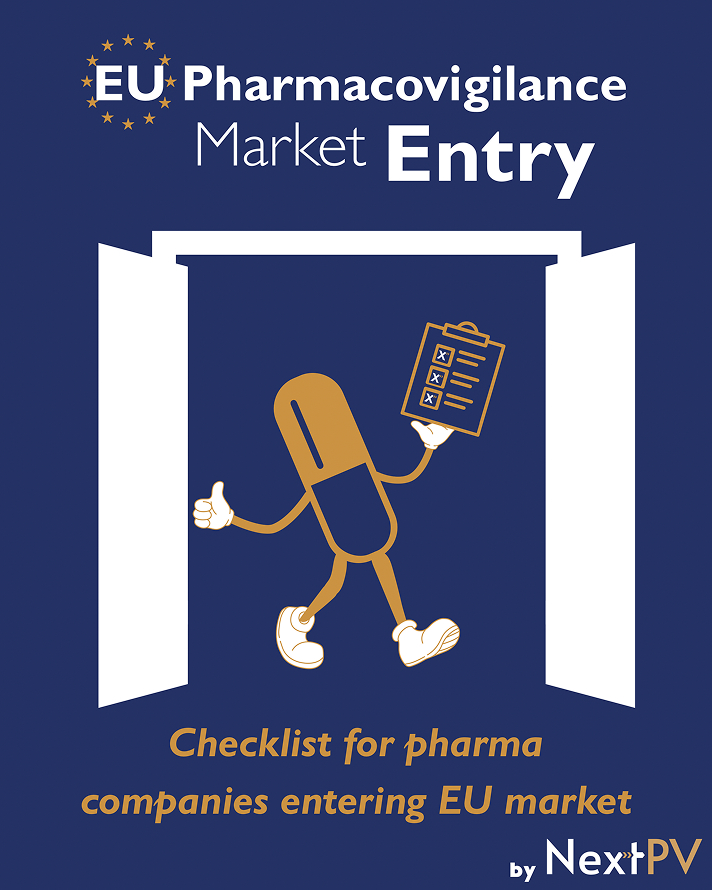
Submit your details to access full 11 pages pdf