
NextIntell is signed regulatory intelligence for pharmacovigilance. AI agents research every EU regulatory source and assess the impact against a QMS baseline you can map to your own. A named human expert signs every item before it reaches you.
No platform rollout. No feed to triage.
Complex is the discipline — eleven authorities, evolving guidance, judgment calls that deserve an expert's full attention. Complicated is the process — eleven tabs, alert noise, platforms that need a project plan before a password.
Complex deserves your attention. Complicated steals it. We draw the line.
NextIntell agents crawl the EU PV regulatory landscape on a controlled schedule — EMA, PRAC outcomes, GVP guidance, the sources your SOPs already point to. Nothing is silently skipped: scan coverage is reported per source family, for every run.
Each relevant change is impact-assessed against an anonymized QMS baseline — so the output reads “here is the affected process, and here is what you do about it”, not “update your SOP”.
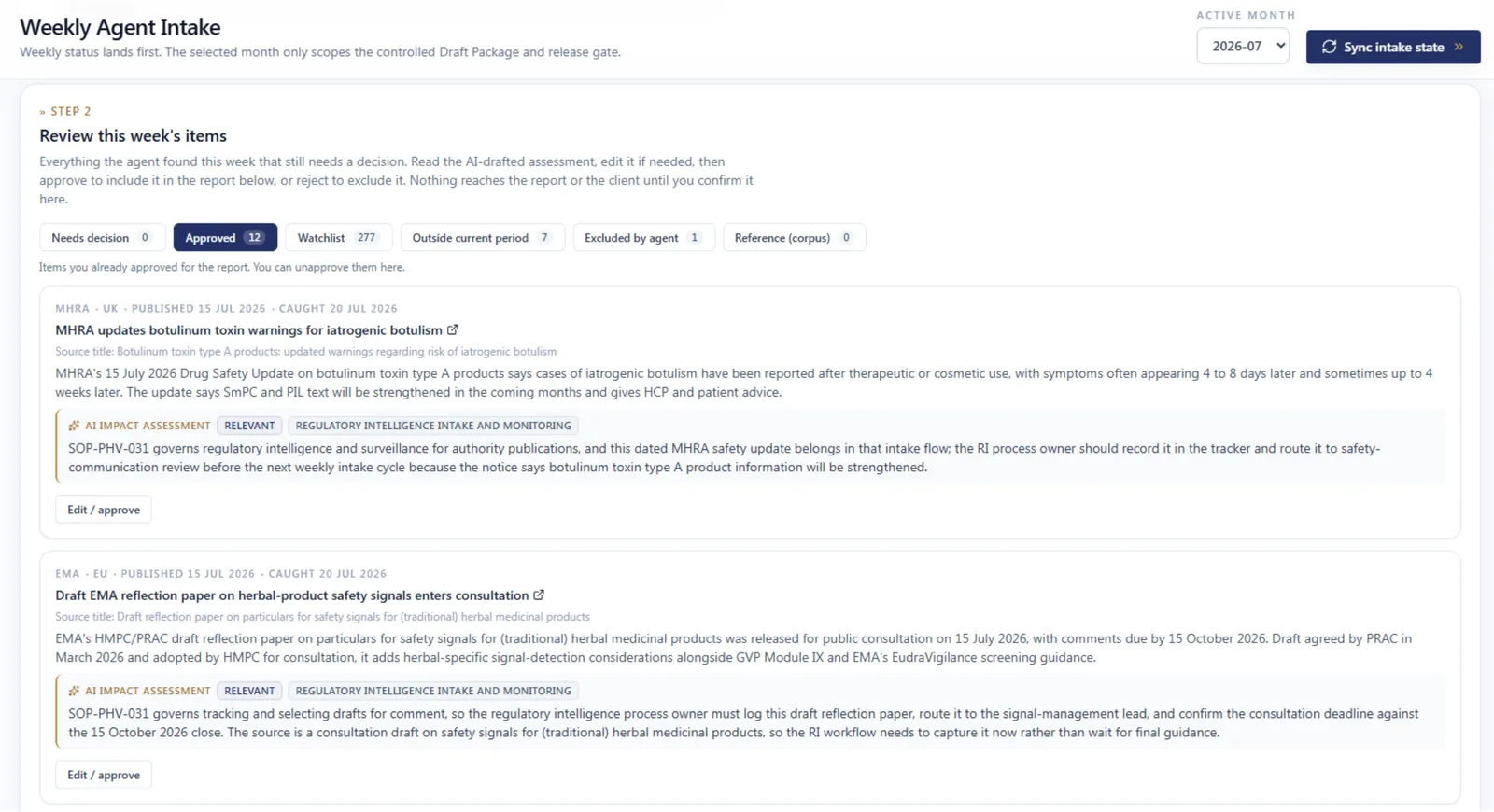
AI output is draft-only. A human with a name reviews every item and approves every brief through a controlled release gate, with a full audit trail behind it.
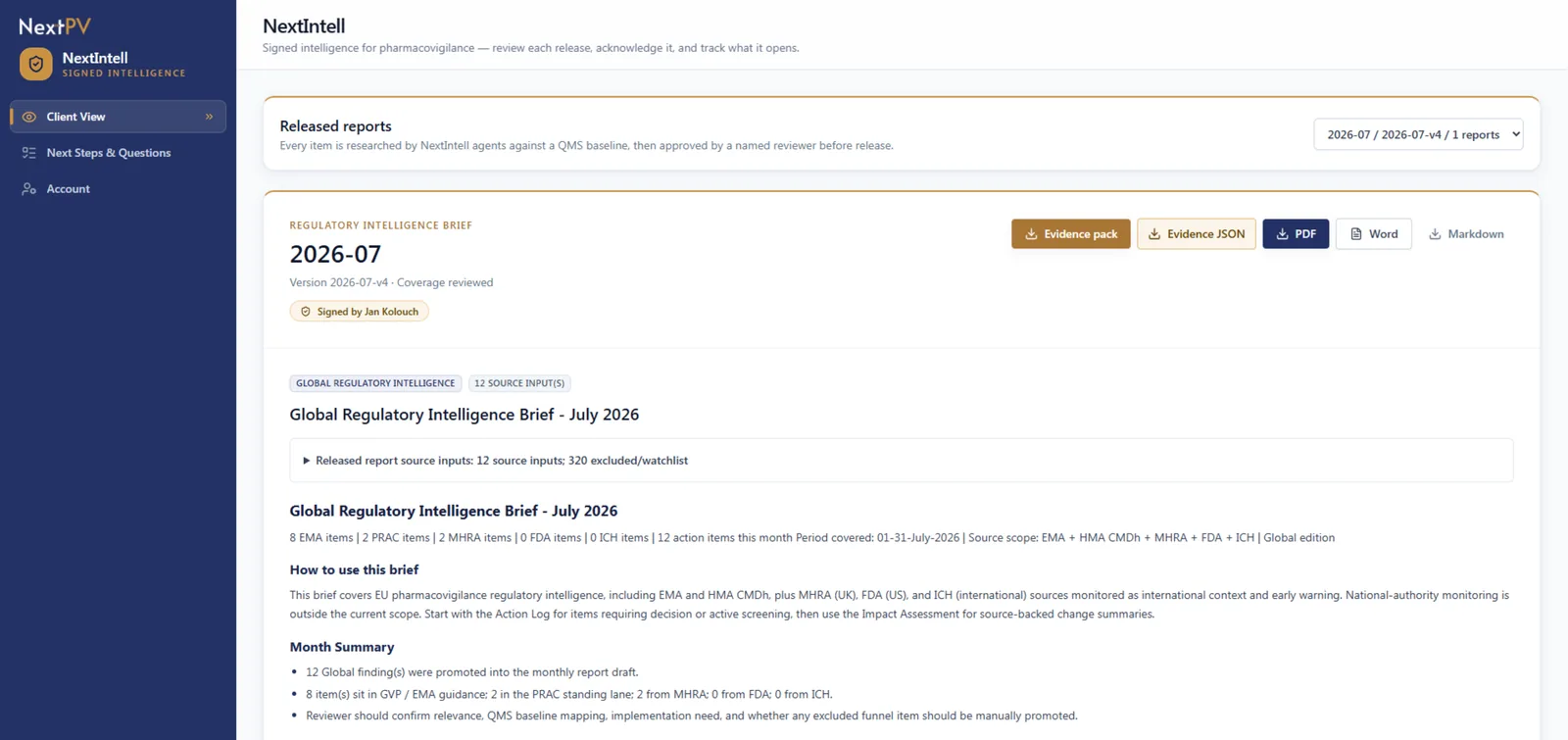
A short, decision-ready brief in your portal — what changed, what it means for you, who should act and by when, with the source trail one click away.
Ask your feed who signs it.
Draft-only AI: The agents draft; they never release. The GxP control point is named human approval, on every item, every time.
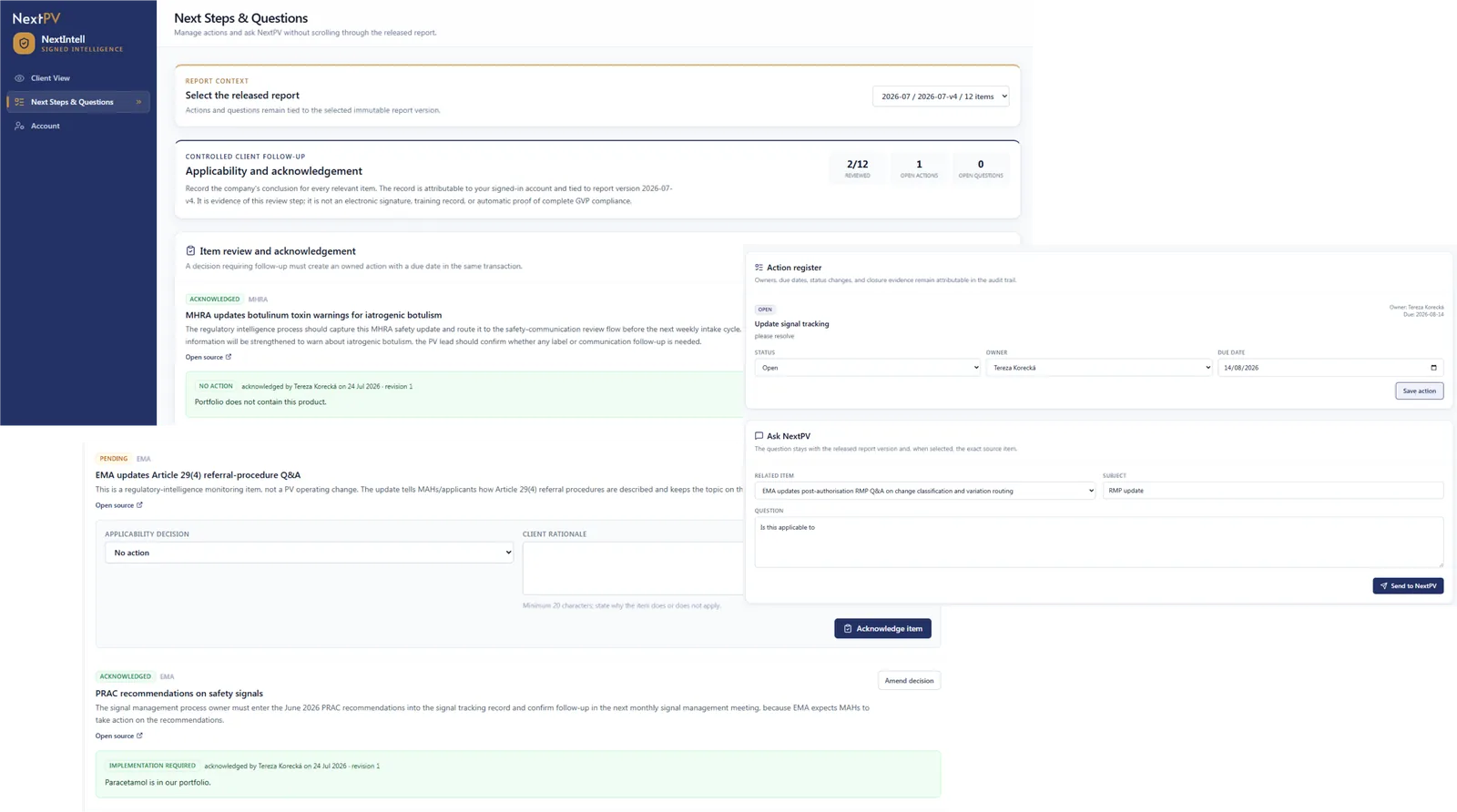
GAMP5-aligned control layer: Provenance, import controls, review, release gate, audit trail, client access — the control layer is what we validate, and we say exactly that.
Evidence on demand: Every released brief exports as an evidence pack — the report plus decisions, acknowledgements, actions, questions and revision history, with a SHA-256 integrity digest.
You know FDA or other authorities. EMA and the national-authority layer are 14 months away, and your PV team is three people. NextIntell gives you EU awareness that stands up in an inspection — before you buy enterprise tooling you don't need yet.
Your name is on the line, your time is borrowed, and “what did I miss?” hums in the background of every working day. NextIntell hands you a signed brief instead of eleven tabs — and keeps the evidence that you acted on it.
What we are not: not a 200-country database, not a platform rollout, not an unreviewed digest. Narrow scope, EU PV, done with a name on it.
Fast, broad — and unaccountable. The triage stays with you.
Fast and signed. Agents at machine speed, a named expert's signature before release, a baseline you can map to your own QMS.
Accountable, senior, expensive.
The space between the feed and the consultancy is exactly where “what did I miss?” lives. That is the space we built for.
One full released brief, exactly as a client receives it — signature block included, free against an email address. Ten minutes, and you'll know.
Thirty minutes. Your regulatory scope, a released report, the release gate, and the evidence pack. If it isn't a fit, you'll know by minute ten.
NextIntell by NextPV Services. AI output is draft-only; every release is approved by a named reviewer. The GAMP5 claim applies to the control layer: provenance, import, review, release gate, audit trail, and client access.